Can you imagine a day without soap? Probably quite difficult. Although soap has been around for over 4500 years, it hasn’t always been as obvious a cleaner as it is today.
Legend has it that the soap is named after the Sappo hill near Rome. It was the site of an animal sacrifice. After the sacrifice, the animals were creamed. During this process, the hot fat dripped into the fire and mixed with the ashes. On one rainy day, the mixture of fat and ash flowed down into the Tiber River, where the women were washing their clothes. It was noted that the laundry washed close to the sacrificial site was much cleaner than that washed upstream.
In the old days, soap was boiled from animal fat, and on the coast and islands, also from seal fat. Ash lye was mixed into the fat to start the saponification process. The lye was obtained by mixing wood ash with hot water and letting it sit for several days. Later, caustic soda, bought from merchants, began to be used instead of lye.
It is known that in 10th-century Castile, Spain, soap began to be produced from olive oil, with aromatic plants added to give it a pleasant scent. The luxury of using such soap belonged only to the upper class; commoners still used soap made from animal fat, if they used any at all. Castile soap quickly spread among the upper class in the rest of Europe. Several Castile soap recipes are still in use, and soaps made according to them can be bought in small soap shops.
In Estonia, the skill of soap making was likely acquired from the Germans during the Middle Ages. Boiling soap was an art that no stranger was allowed to watch. Initially, finished soap was so valuable that it was only used for washing hair. However, soap only became a common household cleaning agent about 150 years ago.
Soap was still boiled on farms and in households as late as the 1960s. After that, however, soap production moved to large enterprises.
Today, making soap at home has become popular again, as homemade soap is free from chemical compounds and is suitable for people with sensitive skin. Small soap producers are popping up more and more in Estonia and elsewhere in the world, and handmade soaps offer significant competition to store-bought ones.

Not all soaps lather! To make soaps lather better, special foaming agents are added to industrial soaps. SLS (Sodium Lauryl Sulphate). While SLS makes soap lather, it is still considered a skin irritant and a rather harmful additive. Instead, coconut oil provides lather to soap from natural ingredients.
Dirt and germs get trapped better in soap lather and are washed away from the hands with water. So, it’s good if the soap lathers, but there doesn’t need to be an excessive amount of foam.
A workshop on soap for the elderly
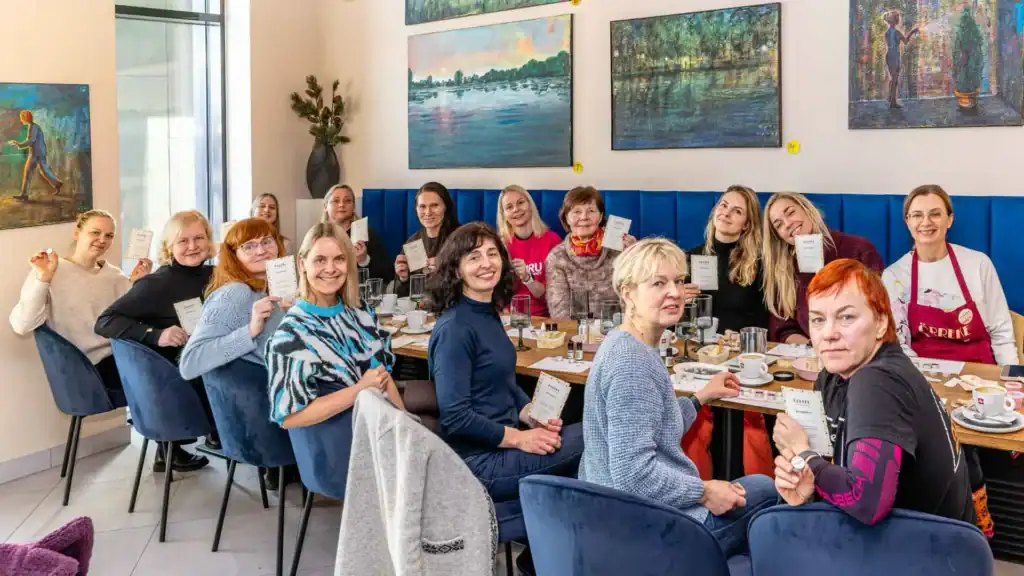
The soap workshop is one of Örreke’s very first workshops. Making soap seemed exciting to us. During the process of making the first soaps, it became clear that it is also surprisingly simple and a perfectly manageable activity for children. So, we made our first soaps with our own children, then with our friends’ children, and then in the children’s kindergarten and school. That’s how Örreke began! From my own childhood, however, I remember the terrible smell that filled my grandparents’ home when my grandfather started boiling soap. Children were not allowed near the soap boiling, as hot fat was boiling in the cauldron and there was a corrosive substance—caustic soda—nearby. This might have been in the early 70s. I still have a couple of the soaps my grandfather boiled, and I keep them as memories!
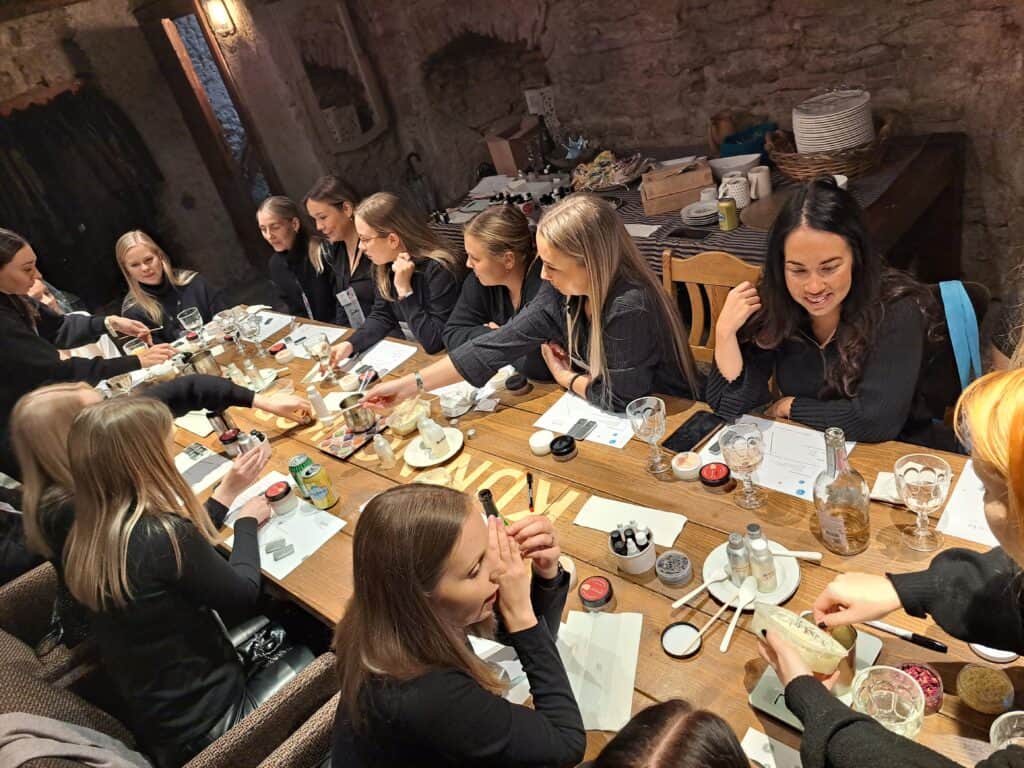
Both children and adults enjoy making soap in Örreke’s workshops. Soap is made using two methods. The simplest is to use a ready-made soap base and pour colorful and transparent soaps from it. However, it is more complicated to make soap using the so-called old-fashioned method, i.e., using different fats and caustic soda (NaOH) for saponification.
In Örreke’s workshops, we make transparent and colorful soaps from a ready-made soap base. The soap base we use does not contain the harmful foaming agent SLS. Upon request, we also conduct courses on the old-fashioned soap-making method, where we mix soap from various oils and fats and use caustic soda for saponification.
Check out Örreke’s soap workshop here.