Home » Eco-life workshop 6 – Making honeyfabric
The world is unfortunately heading in a rather sad direction – plastic pollution, global warming, decreasing fresh water supplies. Looking at all this, you might sometimes feel like what can I change alone. True, one person won’t save the planet. But every small step counts.
A step towards a plastic-wrap-free home is helpful anyway.
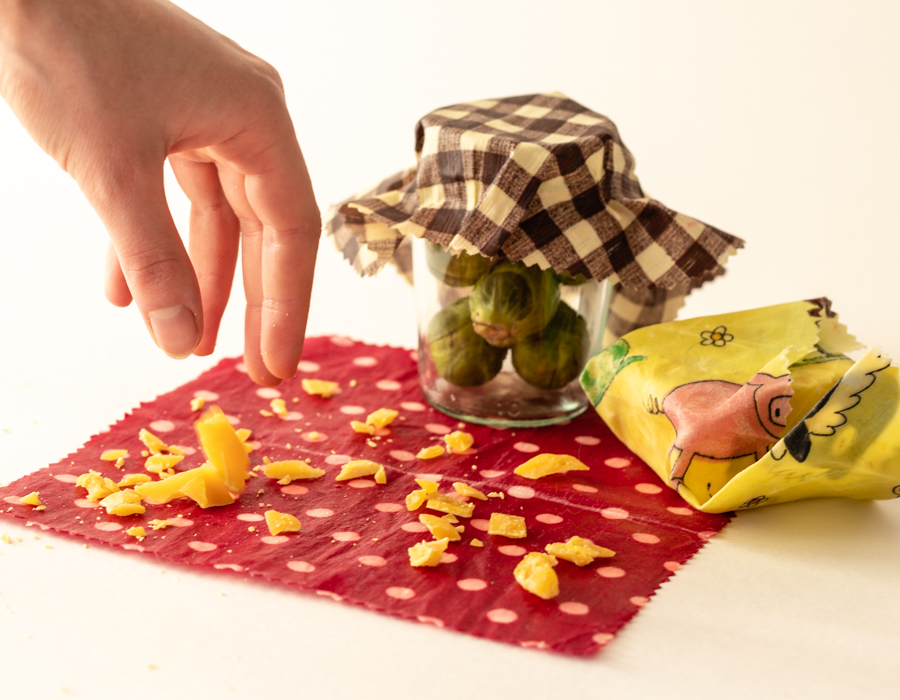
One simple and pleasant way to start is to make your own honeyfabric and give up food film. Some call it wax cloth, but for some reason, that word reminds me of oilcloth – something artificial with a Soviet-era flavor. Honeyfabric is something else entirely: natural, fragrant, and personal.
Making honeyfabric is actually quite simple.
You will need:
cotton fabric (an old kitchen towel that has been thoroughly washed also works),
beeswax,
pine resin (can be found in eco-construction stores, for example),
cooking oil.
The cooler the pattern on the fabric, the more awesome the final result!
Melt the beeswax, pine resin, and a bit of cooking oil together in a separate container. The mixture needs a little tweaking – the goal is to get a nicely sticky yet flexible honeyfabric that can be molded around a container just like food film.
Beeswax provides water resistance (while the fabric remains breathable).
Pine resin adds stickiness.
Oil provides flexibility.
Pour the melted mixture into small molds and let it solidify. Then grate the solidified mass with a large grater and sprinkle the shavings evenly onto a piece of cotton fabric. Place the fabric in an oven at about 70 degrees until the wax has melted evenly. Take it out of the oven and wave the fabric until it solidifies.
And there it is – your very own honeyfabric!
Honeyfabric is reusable. After use, simply rinse it under cool running water and let it dry. The pleasant honey scent lasts a long time but won’t stick to the food.
If the fabric starts to crack over time, you can re-wax it. Or cut it into strips and use them as fire starters – that way nothing goes to waste.
There are many ways to use honeyfabric:
for covering fruits and vegetables,
for keeping bread fresh,
to cover a bowl or plate,
for taking along to the market or store.
Just think for a moment how many plastic bags are used at Nõmme market in a day, for example. I once asked the market vendors – one thought that on better days, they use about 400 small plastic bags. Another orders 2,600 plastic boxes and 1,000 plastic bags a month!
That’s a pretty scary number.
It certainly gives me a good feeling to know that because of me, the market ladies can subtract one from their count. I always have my own designed honeyfabric with me.
And maybe that’s exactly how these changes begin – one small step at a time.
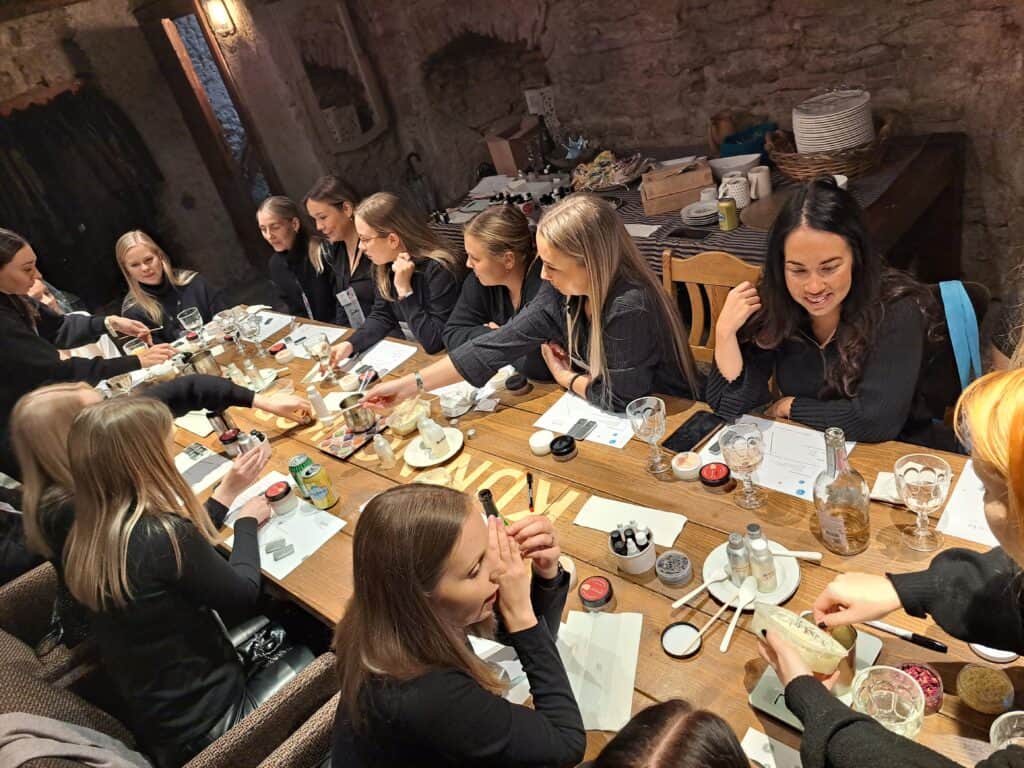
Örrekeses saad mesikanga tegemist õppida meie in the honeyfabric workshop.
In the e-shop, you can find both the honeyfabric making kit and the repair kit